The resource sector is entering a period of change as significant as any in recent decades. Demand is being reshaped by the energy transition, by new industrial applications for critical minerals, and by a global economy that increasingly expects extraction to be accountable to sustainability standards rather than exempt from them.
A Sector at an Inflection Point
It is tempting, in an industry that measures project timelines in decades, to be skeptical of any claim that a genuine inflection point has arrived. Resource development has weathered commodity cycles, technology shifts, and changing political priorities before, and much of the skepticism is warranted. But the combination of forces reshaping demand for strategic minerals over the past several years is broader and more structural than a typical cycle, and it is worth being specific about why.
Three distinct forces are converging at the same time: the energy transition's mineral intensity, which is fundamentally different from the mineral intensity of the fossil fuel infrastructure it is replacing; a widening set of industrial applications for critical minerals that has nothing to do with energy at all; and a shift in what governments, investors, and communities consider an acceptable standard of conduct for resource development, a shift that has moved from aspirational language to enforceable requirement in a relatively short span of years. Any one of these forces alone would be significant. Together, they are reshaping the fundamental economics and expectations of the entire sector.
The Energy Transition's Mineral Appetite
The mineral intensity of a renewable energy and electrified transport system is not a marginal increase over the fossil fuel infrastructure it displaces. It is a categorical shift. An electric vehicle requires several times the mineral input of a comparable internal combustion vehicle, concentrated in copper, nickel, lithium, and a range of rare earth elements used in motors and battery chemistry. Grid-scale renewable generation and storage carry a similar multiplier, and grid transmission infrastructure built to handle more distributed and more variable generation requires copper at a scale existing supply chains were not originally sized to provide.
This has produced demand forecasts that, a decade ago, would have seemed implausible, and it has done so on a timeline that does not comfortably match the lead time required to bring a new major mineral deposit into production, which routinely runs to a decade or more from initial discovery to first production once feasibility, permitting, financing, and construction are accounted for. That mismatch between demand growth and supply lead time is, in itself, one of the defining features of the current moment, and it creates real pressure to accelerate development timelines in ways that can be dangerous if that pressure is allowed to compromise the standards discussed throughout this publication.
Beyond Batteries: New Industrial Applications
The energy transition dominates public discussion of critical mineral demand, but it is not the only driver, and organizations that plan around energy transition demand alone are underestimating the breadth of what is actually happening. Rare earth elements are essential to a widening range of advanced manufacturing applications, from precision electronics to specialized industrial magnets used well outside the energy sector. Semiconductor manufacturing, expanding rapidly across multiple regions as countries pursue supply chain diversification, depends on a range of specialty minerals that were, until recently, a niche concern for a small number of highly specialized producers.
This diversification of demand sources is, in some respects, a stabilizing force for the sector, since it reduces the industry's dependence on any single end market's growth trajectory. It also means that resource companies planning new development need a broader view of end-use demand than a narrow focus on the energy transition alone would provide, and Domfar's own investment evaluation process has been updated in recent years to weight this broader demand picture more heavily than it once did.
Sustainability Standards Are No Longer Optional
Perhaps the most consequential shift of the current era is the least technical: a global economy that increasingly expects extraction to be accountable to sustainability standards rather than exempt from them, and that has begun building enforcement mechanisms to back that expectation rather than leaving it as aspirational language. Investors increasingly require environmental and social governance disclosures as a condition of capital, not as a marketing exercise layered on top of a standard investment thesis. Downstream manufacturers, under pressure from their own customers and regulators, increasingly require supply chain traceability that makes it far harder for a poorly run mineral operation to hide within an otherwise reputable supply chain the way it might have a decade ago.
Organizations that have treated sustainability as a genuine operating discipline rather than a compliance checkbox, which has been Domfar's position since the company's earliest projects, are far better positioned for this shift than organizations now scrambling to retrofit sustainability credentials onto operations that were never designed with them in mind. That retrofitting is difficult, expensive, and in some cases simply not possible without redesigning a project from the ground up, which is precisely why the industry's laggards on this front are increasingly finding themselves locked out of capital and offtake agreements that used to be available regardless of environmental and social track record.
Remote Sensing and Data-Driven Exploration
Technology is changing how resource development is done at nearly every stage, and exploration is where some of the most significant recent change has occurred. Remote sensing, satellite-based geological survey techniques, and increasingly sophisticated data analysis have meaningfully reduced the physical footprint required for early-stage mineral assessment, allowing far more of the initial exploration process to happen before a single access road is cut or a single drill pad is cleared.
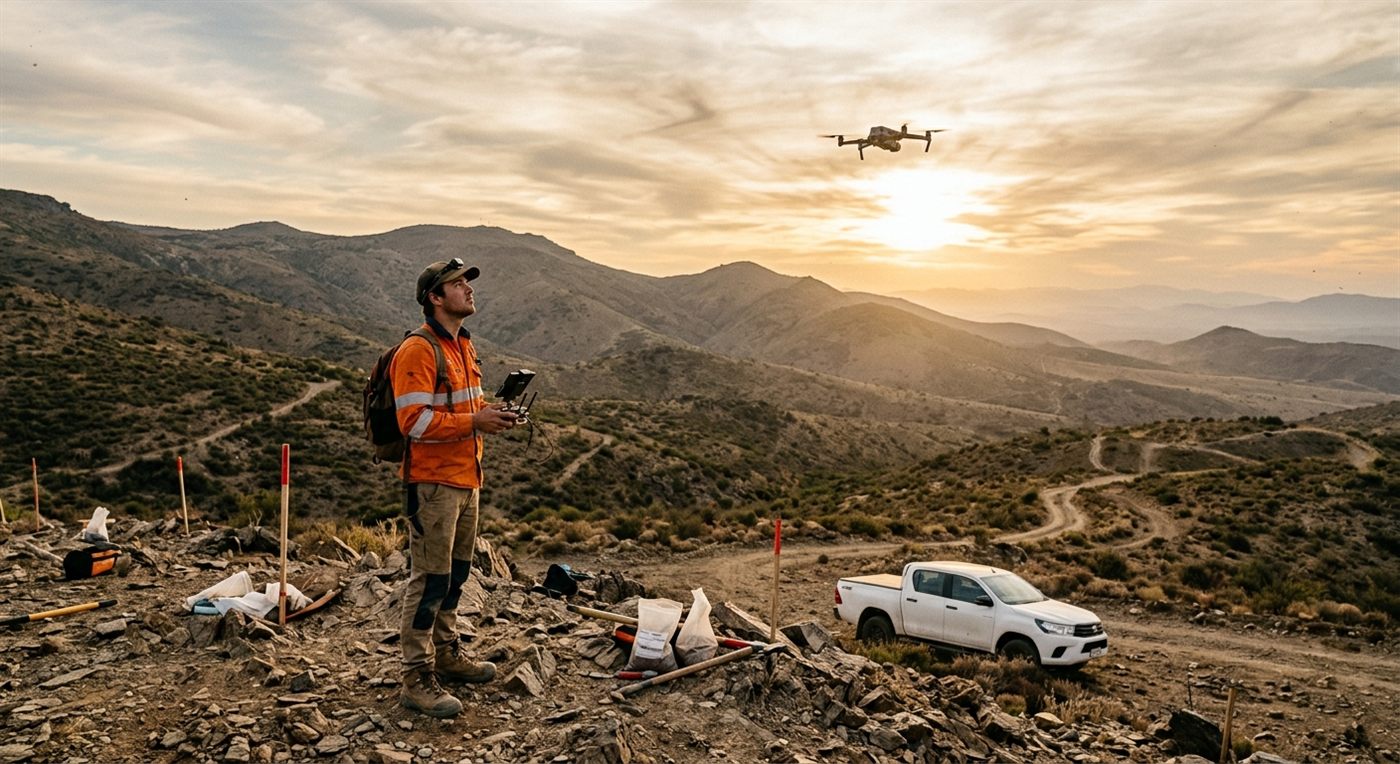
This matters beyond the immediate cost and time savings. Reducing the physical disturbance associated with exploration reduces the environmental and community impact of a phase of a project's life that, historically, received far less scrutiny than active mining itself, precisely because it was assumed to be temporary and low-impact even when, in practice, exploration roads and drill sites left lasting scars on terrain that never saw a mine actually built. Domfar has invested significantly in these tools over the past several years, both to improve exploration accuracy and to reduce this often-overlooked category of environmental impact.
Monitoring Technology and Verifiable Compliance
The second major technological shift is in monitoring and compliance verification. Environmental and operational compliance has historically depended heavily on self-reporting, periodic inspection, and a level of trust in a company's own disclosures that, given the industry's history, regulators and communities have increasingly less reason to extend by default. Continuous monitoring technology, water quality sensors, air quality stations, satellite-based land use tracking, is changing that dynamic by making compliance verifiable in near real time rather than dependent on a company's own periodic self-assessment.
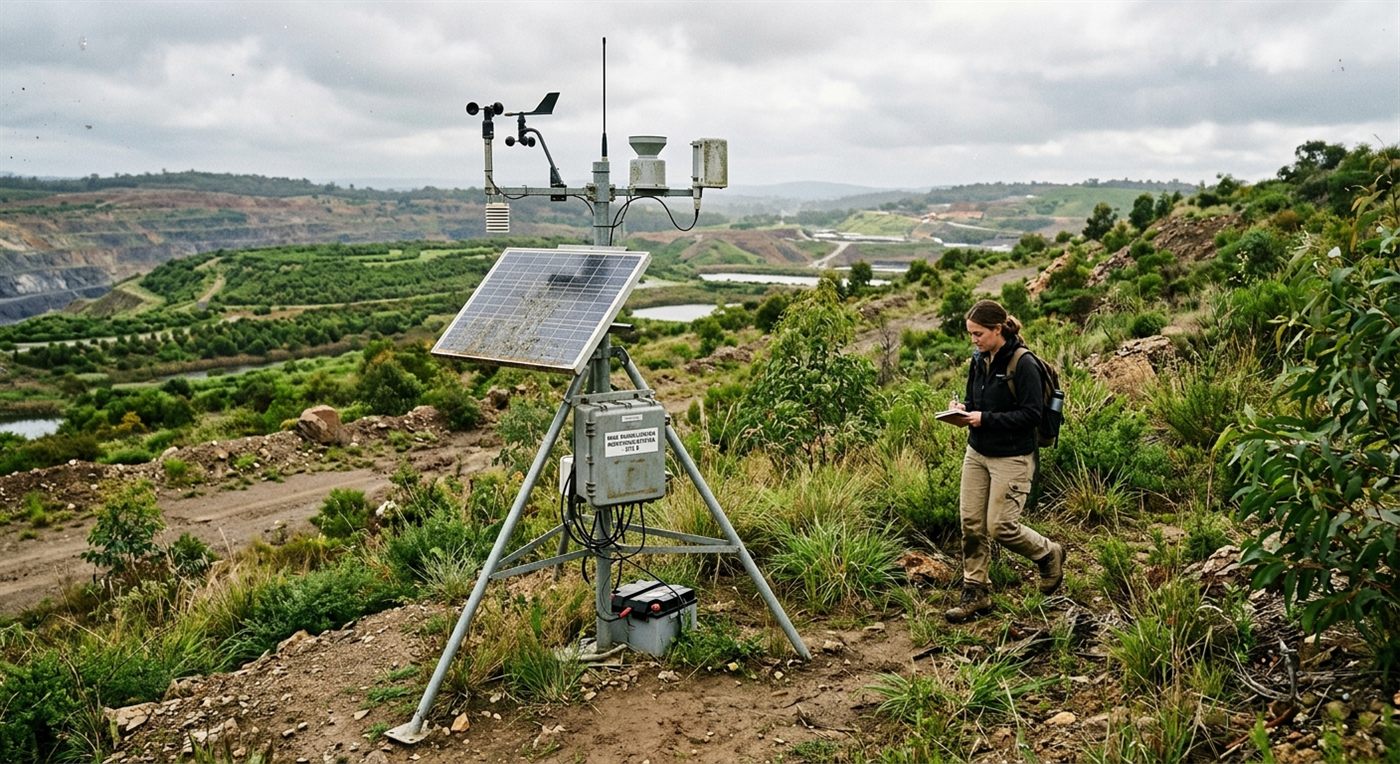
Domfar's position on this shift has been to embrace it rather than resist it, on the premise that a company confident in its own environmental performance should welcome verification rather than treat it as an imposition. This has meant installing continuous monitoring infrastructure at active sites well beyond what current regulation strictly requires, and making a meaningful share of that data available to local communities and regulators directly rather than only through periodic formal reporting, a level of transparency that would have been unusual for the sector a decade ago and is increasingly becoming the expectation for any company that wants to be considered a credible long-term partner.
Rehabilitation and the Afterlife of a Mine Site
What happens to a site after active extraction ends has historically received far less planning attention than what happens while a mine is operating, and this is changing, driven both by tightening regulatory requirements and by a genuine shift in how the industry's better operators think about their long-term relationship with the communities and land they operate on.
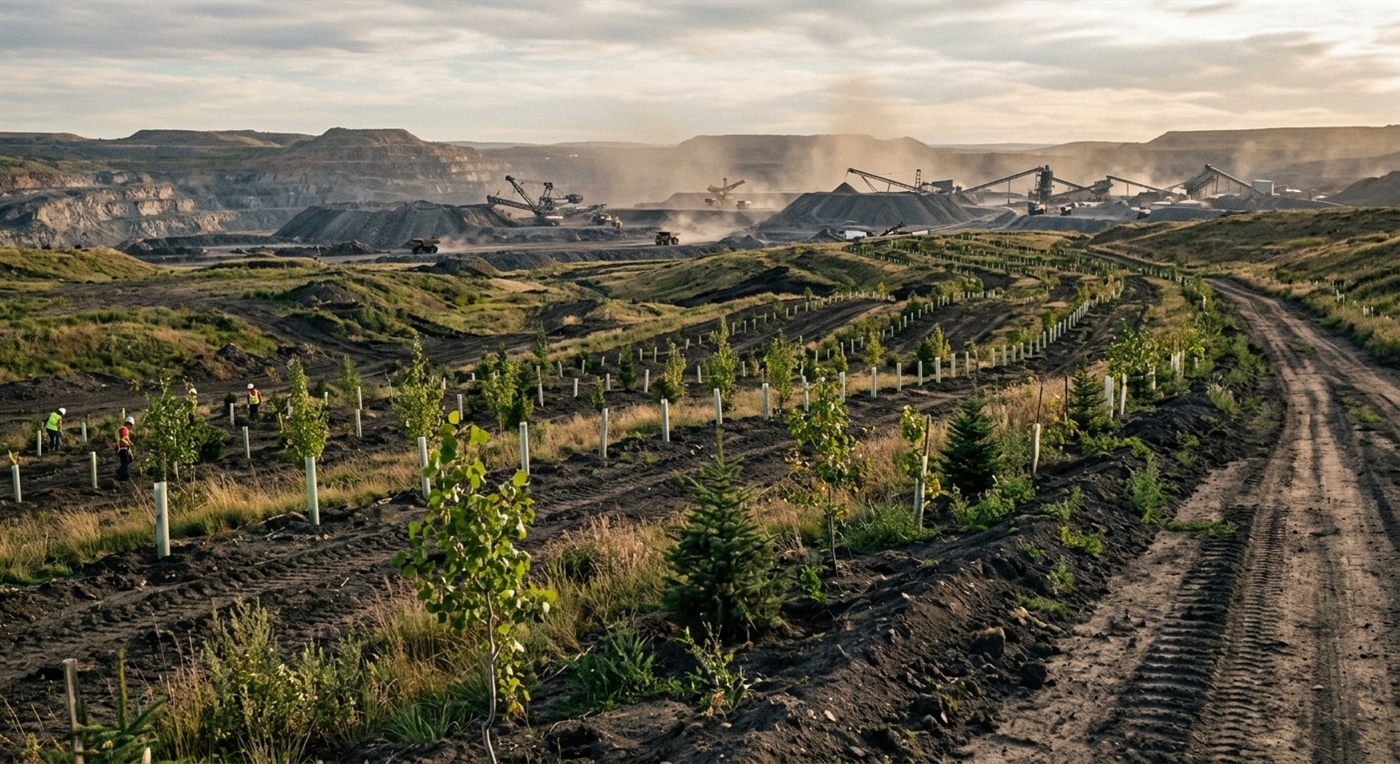
Domfar's approach has shifted, over the past decade, from planning rehabilitation as a final phase to be executed at closure, toward what the industry increasingly calls progressive rehabilitation, restoring and replanting sections of a site as they are exhausted while other sections remain active, rather than leaving the entire disturbed footprint until a single closure phase at the very end of a project's life. This is more operationally complex to manage and requires sustained investment throughout a project's active life rather than a single line item budgeted for the end. It also produces a far better outcome for the land and the communities around it, and it substantially reduces the risk that a company facing financial distress near the end of a project's life will simply be unable to fund the rehabilitation it originally committed to, a scenario that has left lasting damage in parts of the industry's history that the sector is still working to move past.
Supply Chain Diversification and Geopolitical Risk
A less discussed but equally significant driver reshaping the sector is the growing willingness of governments to treat mineral supply chains as a matter of national strategic interest rather than a purely commercial question best left to market forces. Concentration of processing capacity for several critical minerals in a small number of countries has, over the past several years, become a source of visible policy concern for governments that had previously given the matter little attention, and that concern is translating into active industrial policy: subsidies for domestic processing capacity, trade measures affecting mineral exports and imports, and government-to-government agreements aimed explicitly at diversifying supply away from single-source dependency.
For a company like Domfar, operating across multiple regions and increasingly involved in downstream processing decisions alongside pure extraction, this shift changes the calculus of where and how to invest. A jurisdiction actively courting diversified supply chain investment, through streamlined permitting, targeted incentives, or preferential trade arrangements, is a materially different partner than one simply hosting a deposit passively. Domfar's business development process has adapted to weight this kind of policy tailwind more heavily than it once did, recognizing that the next decade's most attractive opportunities may be shaped as much by geopolitics as by geology.
Preparing the Next Generation of Talent
None of the shifts described in this article, toward downstream processing, toward continuous environmental monitoring, toward data-driven exploration, are possible without a workforce equipped to execute them, and the resource sector's talent pipeline has not always kept pace with how the work itself has changed. The geologist, engineer, or site manager the industry needs today increasingly requires fluency in data systems and remote sensing tools that were not part of a standard technical education even a decade ago, alongside the traditional technical and field skills the role has always demanded.
Domfar has responded by expanding its internal training programs well beyond the traditional safety and equipment operation curriculum, into data literacy, environmental monitoring systems, and the regulatory and community engagement skills that the industry's current standards increasingly require of site leadership. This is, in part, a practical necessity, since the specific combination of skills the company now needs is not always readily available in the open labor market in every region it operates. It is also a long-term investment in the same principle that has guided the company's approach to local capacity building for two decades: a resource company's most durable asset, more durable than any single deposit, is the quality and depth of the people who develop and manage it.
What Stays Constant
At the same time, the fundamentals that have guided Domfar since 1998 remain unchanged: resources are valuable only when managed with responsibility, transparency, and long-term vision. Sustainability is not a constraint on responsible resource development. It is what makes long-term resource development possible at all, a principle that predates the current wave of regulatory and investor attention to environmental and social governance by more than two decades, and one that has not required significant revision as external expectations have caught up to it.
This continuity matters more than it might first appear. Organizations that treat sustainability as a response to external pressure tend to adjust their commitment as that pressure fluctuates, investing heavily when scrutiny is high and quietly deprioritizing when attention moves elsewhere. Organizations that treat it as a genuine operating principle, independent of the current regulatory or investor climate, tend to maintain a more consistent standard, which is precisely what long-duration projects and long-term community relationships require.
Looking to the Next Decade
Domfar's role in this next era is the same as it has always been: connecting governments, industries, and investors around projects built to last, in partnerships built on trust. The instruments and the technology will keep evolving, remote sensing will improve further, monitoring will become more granular and more automated, and the specific regulatory frameworks governing sustainability disclosure will continue to tighten across most of the jurisdictions the company operates in. None of that changes the underlying work, which has always been about matching genuine resource opportunity with the discipline required to develop it responsibly, on a timeline measured in decades rather than quarters.
That commitment will not change, regardless of which specific technologies or regulatory frameworks define the coming decade. It is, in the end, the only asset in this industry that does not depreciate.
← Back to Field Notes