Industrialization across Southeast Asia is driving sharp increases in demand for copper, nickel, and rare earth elements. The question is no longer whether the region's mineral wealth will be developed. It is whether that development happens responsibly, or at a cost the region spends decades repaying.
A Shift in Global Demand
For most of the twentieth century, industrial mineral demand followed a predictable curve tied to manufacturing output in North America, Western Europe, and later Japan. That curve has been rewritten twice in the past twenty years, first by the rapid industrialization of China, and more recently by the buildout of renewable energy infrastructure, electric vehicle supply chains, and consumer electronics manufacturing across a widening set of emerging economies. Copper demand alone has grown at a pace that established mining regions cannot fully absorb. Nickel, once valued primarily for stainless steel production, has become a critical input for battery chemistry. Rare earth elements, a category few outside the mining industry could name a decade ago, now sit at the center of discussions about supply chain security for entire national governments.
This is not a temporary spike. The forecasts that matter most, drawn from electrification targets, urbanization rates, and manufacturing capacity under construction across Southeast Asia, all point in the same direction: demand for strategic minerals will continue climbing for at least another two decades, and the geography of where that demand gets met is shifting away from the traditional mining powers of Australia, Canada, and southern Africa toward a wider and more varied set of resource-rich, industrially ambitious nations.
That shift creates opportunity. It also creates risk, because the countries now positioned to supply this demand are, in many cases, still building the regulatory, infrastructural, and institutional capacity that older mining jurisdictions took generations to develop. Domfar's work in Southeast Asia has been shaped almost entirely by that gap between opportunity and readiness, and by what it takes to close it without cutting corners that later prove expensive.
Why Southeast Asia Sits at the Center
Southeast Asia's position in this shift is not an accident of geology alone. The region holds some of the world's largest lateritic nickel deposits, significant copper reserves, and increasingly well-mapped rare earth potential, particularly across Indonesia, the Philippines, and parts of mainland Southeast Asia. But geology has always been present. What has changed is the region's industrial ambition: governments that once treated mineral wealth primarily as an export commodity are now building domestic processing capacity, courting downstream manufacturing investment, and negotiating from a position that assumes long-term partnership rather than one-off extraction contracts.
That ambition changes the nature of the work. A resource company operating in the region today is not simply negotiating access to a deposit. It is being evaluated on whether it can be a credible long-term partner in a national industrial strategy, whether it understands the difference between a mine that generates royalties for a decade and an industrial base that generates employment, technical capacity, and export value for two generations. Domfar's early positioning in the region was built around recognizing that distinction before it became conventional wisdom in the sector.
The First Deposits, and the First Lessons
Domfar's earliest projects in the region were, by design, modest in scale and heavy on process. Before committing to a single major development, the company spent more time than most competitors were willing to spend on baseline geological surveys, community consultation, and regulatory mapping across multiple jurisdictions. That approach was, at the time, viewed by some partners as overly cautious. It has since become the template for how the company approaches every new market.
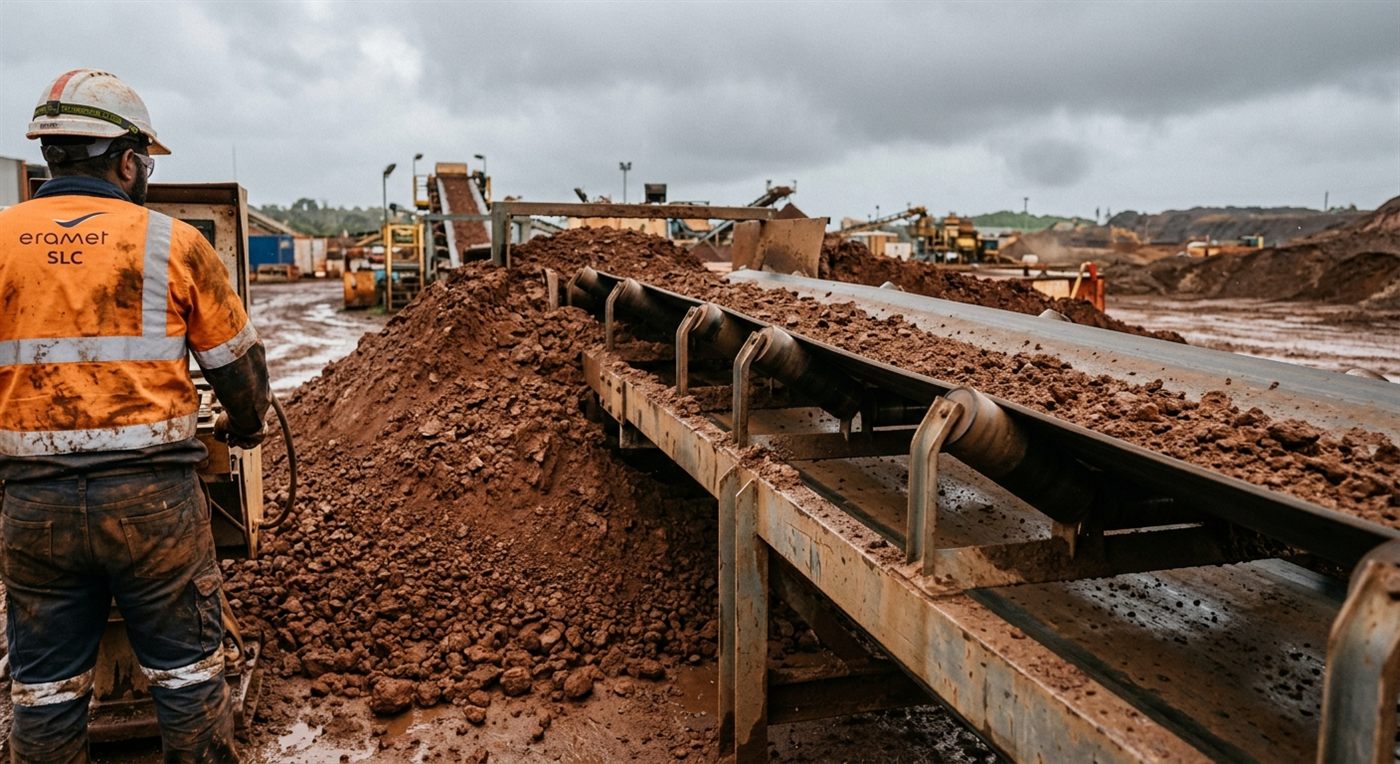
The lesson from those first projects was straightforward but easy to underestimate: a deposit's value on paper means very little if the surrounding conditions, roads, permitting timelines, water access, and workforce availability, cannot support its development on a reasonable timeline. More than one promising site in the region has sat undeveloped for years, not because the mineral wasn't there, but because the surrounding infrastructure and regulatory clarity were not.
Infrastructure: The Cost of Reaching What Is There
The single largest practical obstacle to developing strategic mineral deposits across emerging Southeast Asian markets is not extraction technology. It is access. Many of the most promising nickel and rare earth deposits sit in terrain that has never supported industrial-scale transport: unpaved roads that wash out in monsoon season, port capacity built for fishing fleets rather than bulk carriers, and power grids with neither the capacity nor the redundancy that continuous industrial operation requires.
Building that infrastructure is expensive, and the temptation in the industry has historically been to build the minimum required to get ore moving, deferring the harder investments in permanent roads, grid capacity, and water management until the deposit has already begun generating revenue. Domfar's experience suggests this is a false economy. Infrastructure built to a minimum standard tends to fail in ways that are more expensive to fix mid-operation than to build correctly from the start, and it leaves almost nothing of lasting value once a deposit is exhausted, which matters enormously to the communities and governments who have to live with what remains.
Regulation: A Patchwork Playing Field
The second barrier is regulatory. Mineral development across Southeast Asia does not answer to a single coherent framework. National mining codes, provincial or regional permitting authorities, environmental review processes, and community consent requirements often operate on different timelines and different standards, sometimes within the same country. A project that satisfies national-level requirements can stall for years at the provincial level over questions that were never clearly resolved at the outset.
This patchwork is not evidence of poor governance so much as evidence of institutions still catching up to the pace of industrial ambition. Domfar's approach has been to treat regulatory complexity as a planning input rather than an obstacle to route around. That means building relationships with regulators at every level before a project reaches the permitting stage, not after, and it means being willing to accept a longer runway to approval in exchange for a framework that will hold up over the life of the project.
Environment: The Bill That Comes Due Later
The third barrier, environmental risk, is the one most likely to be underweighted in early project planning, and the one most likely to determine a project's reputation and viability over its full lifespan. Nickel laterite mining in particular carries meaningful environmental exposure: tailings management, water table impacts, and land rehabilitation requirements that, if planned poorly, generate liabilities that can outlast the mine itself by decades.
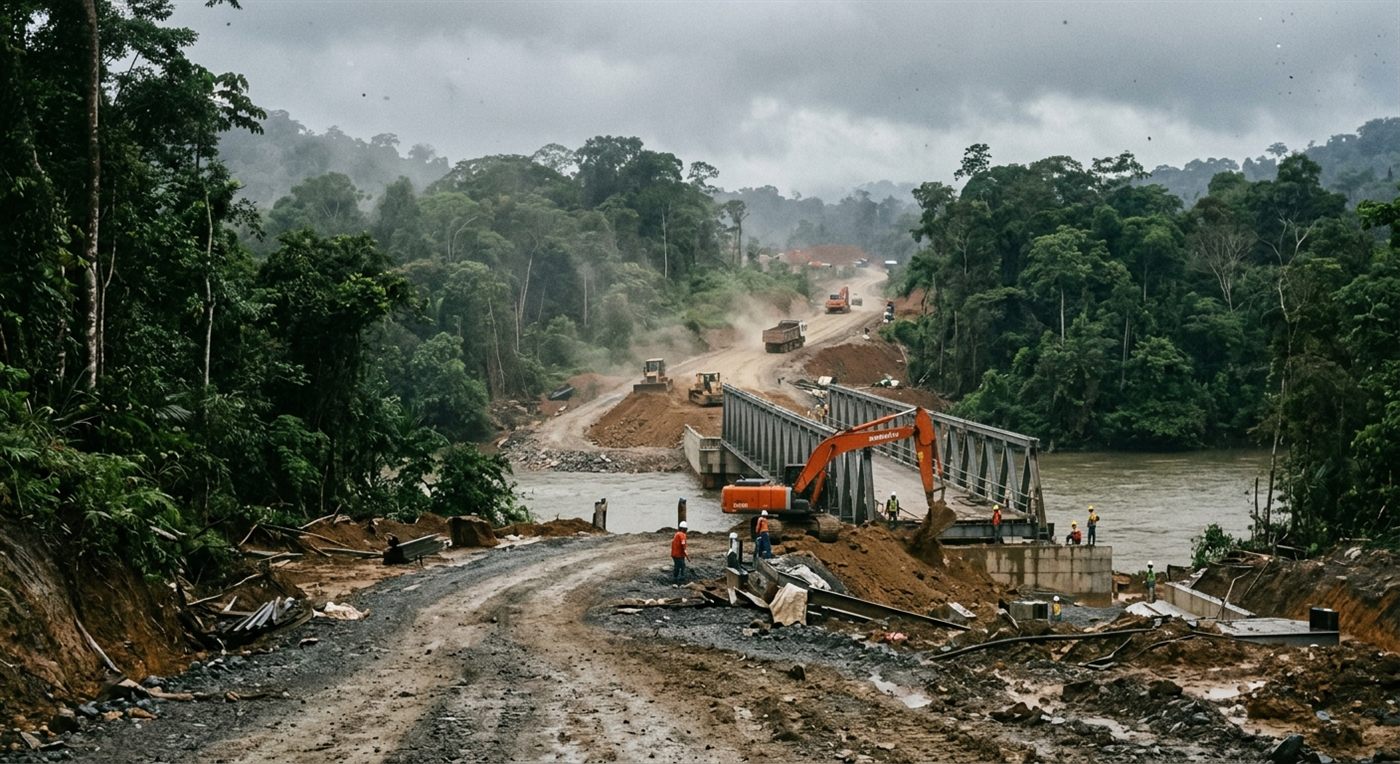
The industry's historical pattern in the region has too often been to treat environmental standards as a compliance checkbox rather than a design constraint. Domfar's position, formed in these early years and unchanged since, is that environmental planning has to happen at the same stage as engineering planning, not after it. A tailings management plan designed after a mine layout is finalized is almost always a worse plan than one that shaped the layout from the beginning.
The Case for Planning Jointly, From the Start
What connects all three barriers, infrastructure, regulation, and environment, is that each becomes dramatically more expensive and more contentious when addressed reactively rather than as part of initial feasibility work. The projects across Southeast Asia that have delivered the best long-term outcomes, for investors, for governments, and for the communities nearest to them, are consistently the ones where government and private-sector partners sat down together during the earliest feasibility stage and aligned on infrastructure investment, regulatory expectations, and environmental standards before a single truck moved ore.
This is a harder way to start a project. It requires patience from investors accustomed to faster timelines in more mature mining jurisdictions, and it requires governments to commit resources and attention earlier than they might prefer. But the alternative, moving quickly and resolving these questions as they arise, has produced a long and visible list of stalled projects, community disputes, and environmental liabilities across the region that a more deliberate approach could have avoided.
Building Local Capacity, Not Just Local Jobs
Employment figures are the number most commonly cited when a resource company describes its local impact, and they are the easiest number to get right without actually building anything durable. A mine that employs several hundred local workers in equipment operation and basic labor roles has created jobs, but it has not necessarily created capacity that survives the mine's eventual closure. The more meaningful measure, and the one Domfar has weighted more heavily as its Southeast Asian operations have matured, is how much technical and managerial capacity a project builds in the surrounding workforce over its lifetime.
That means investing early in training programs that go beyond safety certification and equipment operation, into geological assessment, environmental monitoring, and site management roles historically filled by expatriate staff rotated in from other regions. It is slower and more expensive in the short term to develop that capacity locally rather than import it. It is also the only approach that leaves a region better equipped to manage its own resource sector after any single project ends, and it is increasingly what governments across the region expect as a condition of long-term partnership rather than a goodwill gesture layered on top of a standard contract.
The Cost of Getting It Wrong
It is worth being explicit about what the alternative looks like, because the region has no shortage of examples. Deposits developed quickly, with infrastructure built to the minimum standard required to move ore, show a consistent pattern of failure: roads that cannot survive a second monsoon season without major repair, water systems never sized for industrial demand that now compete with agricultural and community use, and tailings facilities designed for a projected mine life that turned out to be too short once actual ore grades came in lower than the initial survey suggested.
Each of these failures is expensive to fix after the fact, more expensive, in nearly every documented case, than building correctly from the outset would have been. But the more lasting cost is reputational and relational. A government that has watched one major mineral project generate a decade of local disputes over water access or road damage does not extend the same trust to the next investor that arrives with a similar proposal, regardless of how different that investor's actual practices might be. The industry's credibility in any given market is, in practice, a shared resource that gets depleted by the worst actors and only slowly rebuilt by the best ones.
The Role of Downstream Processing
A decade ago, most conversations about strategic minerals in Southeast Asia began and ended with extraction: how much ore could be pulled from a given deposit, and how quickly it could be shipped to processing facilities elsewhere, typically in China, Japan, or South Korea. That framing is changing, and it is changing because the governments in the region have decided it should. Indonesia's evolving stance on unprocessed nickel ore exports is the most visible example, but it reflects a broader regional pattern: countries that hold the resource increasingly want to hold a larger share of the value chain that resource creates, not just the royalty from digging it up.
This shift has real consequences for how a project gets planned. A deposit developed purely for ore export requires one kind of infrastructure: roads and ports sized for bulk raw material. A deposit developed with domestic smelting or refining capacity attached requires a fundamentally different footprint, more power generation, more water, a different workforce skill profile, and a much longer capital commitment before the first dollar of revenue arrives. Domfar's investment evaluations have increasingly had to model both scenarios, and in most cases across Southeast Asia today, betting against downstream processing capacity being required at some point in a project's life has proven to be the wrong bet.
The upside for a company willing to make that longer-term commitment is a much stronger negotiating position with host governments, and a project that is far more resistant to the political risk of export restrictions or royalty renegotiation, since the government's own industrial strategy becomes bound up in the project's success rather than positioned against it. The downside is that it requires patience and capital discipline that not every investor is willing to bring to a market still building the regulatory certainty to protect that kind of investment. Domfar's answer has been to treat downstream processing not as an optional add-on to be evaluated later, but as a question that belongs in the same feasibility conversation as the mine itself.
Community Expectations Are Rising Faster Than Regulation
One of the more consistent patterns across Domfar's projects in the region has been the gap between what formal regulation requires of a resource developer and what the communities nearest to a project actually expect. Regulatory frameworks, even where they are well designed, tend to specify minimums: a required number of community consultation sessions, a minimum environmental impact disclosure, a formula for local hiring quotas. Communities, particularly in areas that have already seen one or two resource projects come and go, have expectations that have moved well past those minimums.
Access to clean water that does not compete with a new industrial operation. Meaningful, ongoing consultation rather than a single disclosure meeting held to satisfy a permitting requirement. Local hiring that leads somewhere, not just an entry-level job with no path to a technical or supervisory role. Visible, credible commitments to what happens to the land and the workforce once the deposit is exhausted. None of these are, strictly speaking, required by most current regulatory frameworks in the region. All of them are, in practice, required to secure and maintain a social license to operate, which matters more to a project's actual timeline than any single permit.
Domfar's experience is that treating community expectations as a moving target to be managed, rather than a fixed regulatory bar to be cleared, produces better outcomes on both sides. It means budgeting time and resources for engagement that goes beyond what any permit requires, and it means being honest with communities about what a project can and cannot deliver, rather than overpromising to secure initial consent and underdelivering once construction begins. Projects that get this wrong do not typically fail all at once. They accumulate friction, a delayed permit here, a blockaded access road there, a change in local government that reopens questions the company thought were settled, until the cumulative cost of that friction exceeds what a more genuine early investment in the relationship would have cost.
What This Means for the Next Decade
None of this is likely to slow down. If anything, the pressure to develop Southeast Asia's strategic mineral wealth quickly will intensify as global demand climbs and as more governments recognize the strategic value of controlling supply closer to the source rather than depending entirely on established exporters. The temptation to cut the timeline short, to defer infrastructure investment, to treat regulatory approval as a hurdle rather than a partnership, will not disappear. It will likely grow stronger.
The organizations trusted with the next generation of major deposits across the region will not be the ones that moved fastest on the last one. They will be the ones that can point to a track record of infrastructure that held up, regulatory relationships that survived changes in government, and environmental outcomes that did not become someone else's problem to solve a decade later. Domfar's work over these early years has been oriented entirely around building that kind of track record, on the premise that in a region moving this quickly, discipline is not a constraint on growth. It is what makes durable growth possible at all.
← Back to Field Notes