Many of the world's most valuable mineral deposits sit in some of its most operationally demanding regions. Operating responsibly there requires treating risk management as a core discipline, not an afterthought bolted onto a project plan.
The Terrain Reality
Geology does not distribute itself according to infrastructure convenience. Some of the richest deposits Domfar has evaluated over the past two decades sit in locations that, by any conventional measure, are difficult to operate in: mountainous terrain with few roads, dense forest with limited line of sight, regions with variable security conditions shaped by factors entirely outside a resource company's control, and areas where the nearest hospital, airstrip, or reliable communications infrastructure is hours away rather than minutes.
This is not an unusual circumstance to be managed around on the way to a more typical project. For a meaningful share of Domfar's operating portfolio, it is the baseline condition. Treating it as anything other than the baseline, planning as though a site will behave like a well-connected industrial park and adjusting only when reality intrudes, is one of the more reliable ways to get hurt, delayed, or both.
Why Risk Management Is Core Discipline, Not Overhead
There is a persistent tendency across the resource industry to treat security and risk planning as a cost center, a necessary but fundamentally unproductive expense layered on top of the real work of extraction and development. Domfar's leadership, particularly since the formal establishment of the Strategic Operations & Security Division, has rejected that framing directly. Risk management in a complex operational environment is not overhead. It is a precondition for the rest of the project existing at all, in the same category as geological viability or financing, not a compliance function bolted on afterward.
This distinction matters because it changes when risk planning happens. Treated as overhead, security and risk considerations get addressed after a site is selected and a development plan is largely fixed, at which point the options for reducing risk are mostly limited to reactive measures: more guards, more barriers, more insurance. Treated as core discipline, risk considerations shape the site selection process itself, the choice of access routes, the design of on-site facilities, and the sequencing of development activity from the very beginning, when the options for reducing risk are far broader and far cheaper to implement.
The Mandate of Strategic Operations & Security
Domfar's Strategic Operations & Security Division exists to hold this discipline across every active project, regardless of region. Its mandate spans four broad areas: security planning for personnel and physical assets, coordination of logistics through difficult terrain and unpredictable conditions, development of crisis response protocols before they are needed, and continuous risk monitoring that treats the operating environment as a variable that changes over time rather than a fixed condition assessed once at project start.
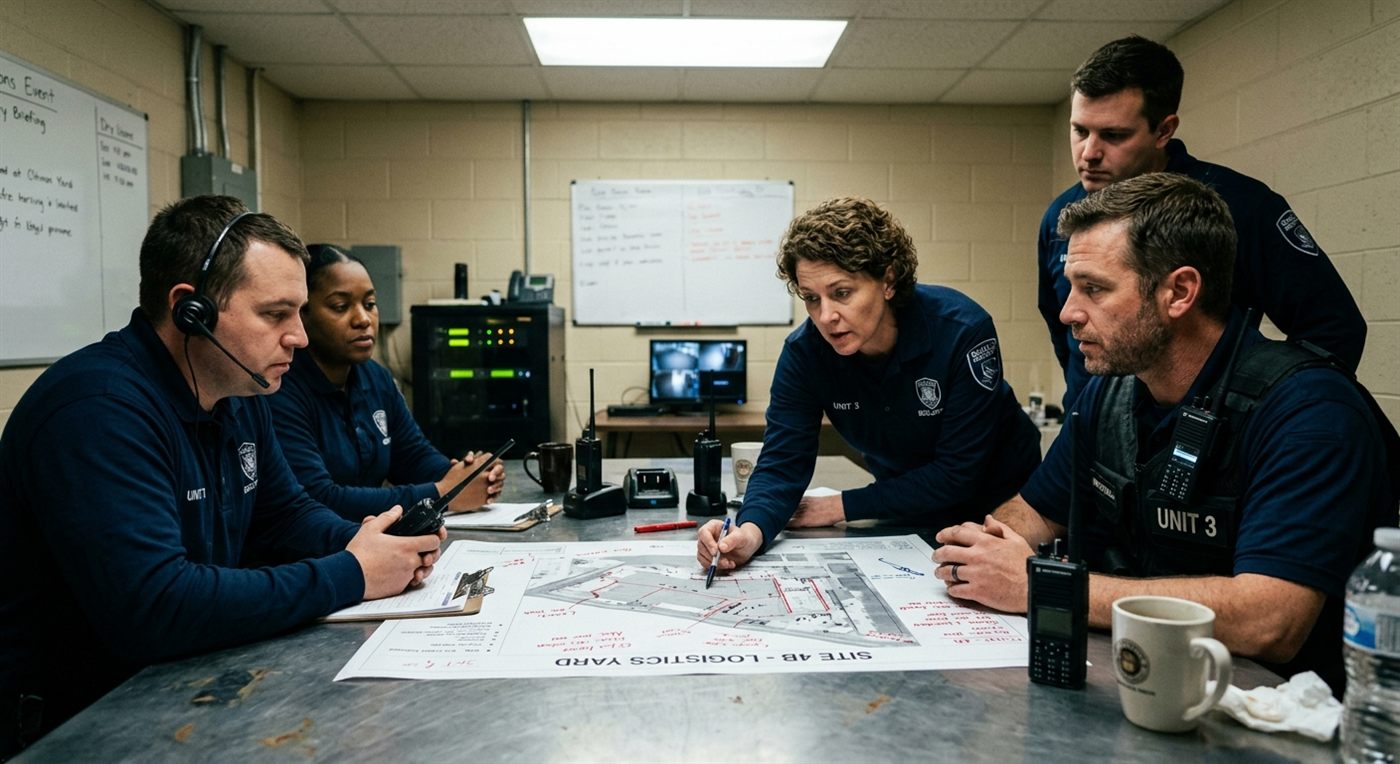
The division does not operate as an isolated function that gets consulted once planning is otherwise complete. It sits at the table from the earliest feasibility discussions for any new site, alongside geological, engineering, and community relations staff, on the premise that a decision made in any one of those areas without input from the others tends to create risk exposure that could have been designed away entirely.
Security Planning in Practice
Security planning for personnel and assets in a remote operational environment starts well before anyone arrives on site. It includes detailed terrain and access assessments, evaluation of the variable security conditions specific to a given region, which can range from petty crime risk to more serious concerns depending on location, and the establishment of clear protocols for personnel movement, communication check-ins, and escalation procedures if a planned movement does not go as expected.
None of this is generic. A protocol appropriate for one operating region can be entirely wrong for another, and Domfar's approach has been to build security plans from a fresh assessment of each specific site rather than applying a standardized template across the portfolio. That specificity takes more time upfront. It also avoids the common failure mode of a security plan that looks thorough on paper but was never actually designed around the conditions of the place it is meant to protect.
Logistics as a Risk Discipline
Logistics in a complex operational environment is not simply a supply chain problem to be optimized for cost and speed. It is one of the primary vectors through which risk enters a project, and one of the primary tools available for managing that risk down. A single access route into a remote site is a vulnerability: a washout, a landslide, or a security incident along that route can isolate a site entirely, with consequences ranging from delayed deliveries to a genuine emergency if personnel cannot be evacuated when needed.
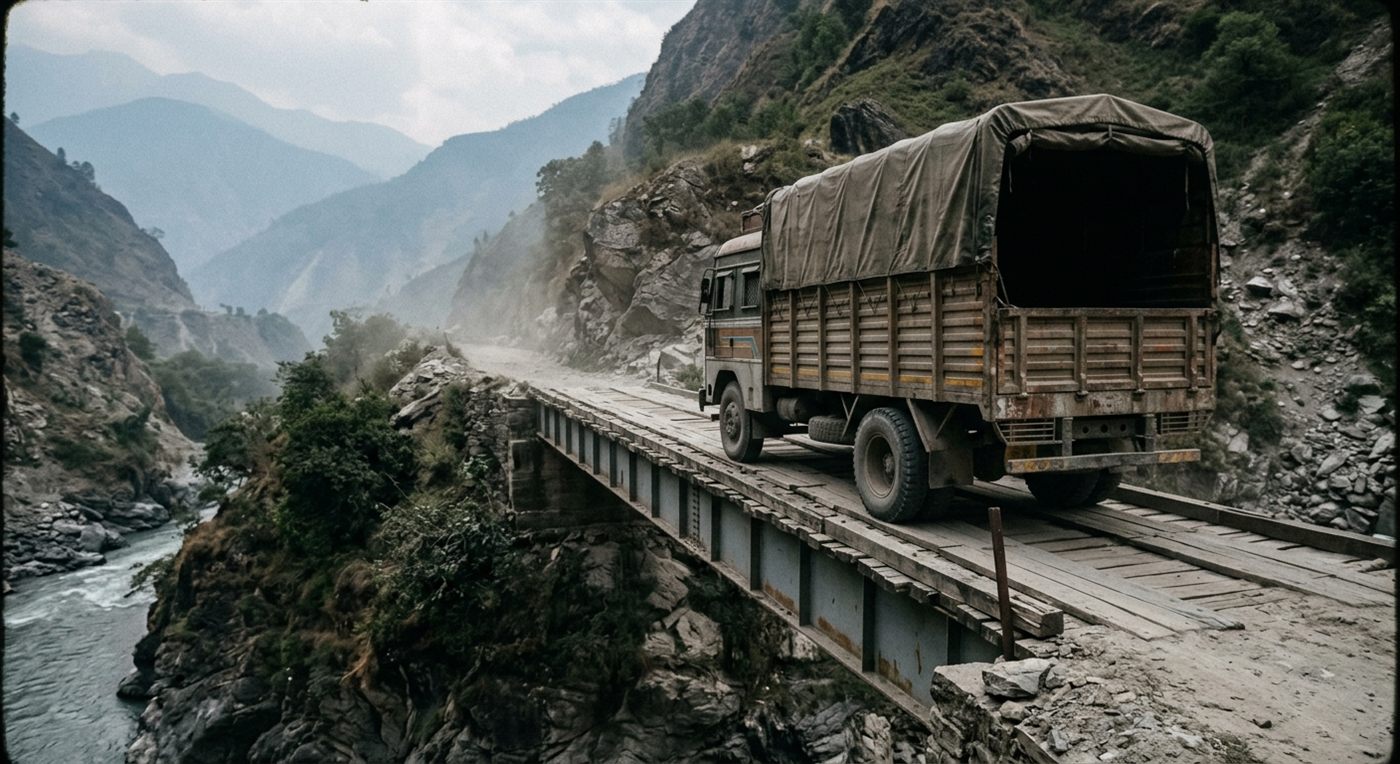
Domfar's standard practice for any site reliant on a single primary access route is to map and maintain at least one viable alternative, even where that alternative is slower or more expensive to use under normal conditions. This redundancy costs money that a purely cost-optimized logistics plan would not spend. It has, on multiple occasions across the company's operating history, been the difference between a temporary disruption and a genuine crisis when a primary route became unusable without warning.
Building Crisis Response Before It Is Needed
The guiding principle behind Domfar's crisis response planning is straightforward to state and consistently difficult to fully practice: a plan built during a crisis is almost always a worse plan than one built calmly, in advance, by people who have the time to think through second- and third-order consequences that get missed when a decision has to be made in minutes rather than weeks.
This means pre-established evacuation protocols for every site, tested rather than merely documented, with clear roles assigned before an incident rather than improvised during one. It means communication trees that specify exactly who contacts whom, in what order, and through what backup channel if the primary one fails. It means maintaining relationships with local authorities, medical facilities, and where relevant, embassy or consular contacts, well before any of those relationships are needed in an emergency, since the first conversation with a local authority should never happen in the middle of an actual crisis.
The Judgment Layer: When Plans Must Flex
No amount of advance planning eliminates the need for judgment in the moment. Conditions on the ground change in ways that no plan anticipates precisely, and the projects that weather disruption well are, almost without exception, staffed with people experienced enough to recognize when a documented plan needs to flex to actual conditions rather than being followed rigidly past the point where it still makes sense.
Domfar has deliberately built this judgment capacity into its Strategic Operations & Security staffing model, prioritizing field experience in genuinely difficult environments over credentials alone when hiring for these roles. A security plan is a starting point, not a substitute for the trained judgment of people who have actually operated in similar conditions before and know, in ways that are hard to fully document, when a situation calls for a different response than the one written down.
Working With Local Authorities and Communities on Security
Security in a remote operational environment is never purely a company function, however extensive an internal security team might be. Local authorities, community leaders, and, in many regions, informal local security arrangements that predate any resource project all play a role in the actual security condition of a site, and a company that tries to operate independently of these existing structures, rather than in coordination with them, tends to create friction that undermines security rather than improving it.
Domfar's approach has been to invest early in relationships with local law enforcement and community security structures, treating them as partners in a shared interest rather than as obstacles to be worked around or, worse, as adversaries. This has meant, in some regions, providing training or equipment support to local authorities whose own resources are limited, always calibrated carefully to avoid the appearance or the reality of a private company exercising undue influence over public security functions, a line the Strategic Operations & Security Division treats with particular seriousness.
Learning From Incidents
Every operational environment eventually produces incidents, from minor logistics disruptions to more serious security events, and how an organization responds to those incidents after the fact says as much about its risk culture as how it plans beforehand. Domfar maintains a formal post-incident review process for any event that triggers an emergency protocol, regardless of how minor the ultimate outcome, on the premise that a near-miss studied carefully is more valuable than a serious incident studied superficially.
These reviews are deliberately structured to focus on what the plan missed rather than on assigning individual blame, since a review culture oriented around blame tends to produce staff who hide problems rather than report them, which is precisely the opposite of what a genuine risk management culture requires. Lessons from these reviews feed directly back into the standing protocols for the site involved and, where relevant, into the broader library of practices the division maintains across the portfolio.
Training Before Deployment
No protocol, however well designed, is useful if the people responsible for executing it have never practiced doing so under realistic conditions. Domfar requires every staff member assigned to a remote or high-risk site to complete a structured pre-deployment training program before arrival, covering the specific security, medical, and communication protocols relevant to that site, not a generic company-wide curriculum that treats every location as interchangeable.
This training includes simulated scenarios, a communications failure during a logistics movement, a medical emergency at a location hours from the nearest facility, an unplanned evacuation, run under conditions designed to approximate the stress of an actual incident rather than a passive classroom review of written procedures. Staff who perform a task correctly in a calm training environment do not always perform it correctly under genuine pressure, and the gap between those two conditions is precisely what realistic simulation is designed to surface and close before it gets tested for the first time in an actual emergency.
Insurance, and Its Limits
Every project operating in a complex environment carries insurance against a range of operational and security risks, and it would be a mistake to treat that coverage as a substitute for the operational discipline described throughout this article. Insurance addresses financial exposure after a loss has occurred. It does nothing to prevent the loss itself, and it does even less to protect the people involved in an incident, which is always the more important consideration regardless of what a policy covers.
Domfar's internal guidance to project teams has always been explicit on this point: insurance coverage is a financial backstop, never a risk mitigation strategy, and any planning discussion that treats adequate coverage as sufficient justification for skipping a more rigorous operational safeguard is treating the wrong question as settled. The projects that have had the fewest serious incidents across the company's history are not the ones with the most extensive insurance coverage. They are the ones where operational discipline made a claim unnecessary in the first place.
Technology's Growing Role in Risk Monitoring
The tools available for monitoring conditions in a remote operational environment have improved substantially over the past decade, and Domfar's Strategic Operations & Security Division has adopted them deliberately rather than reflexively. Satellite communication systems now provide reliable connectivity in locations where terrestrial networks never will, removing one of the historical single points of failure in emergency communication plans. Real-time vehicle tracking allows a logistics coordinator to know immediately when a convoy deviates from an expected route or falls behind an expected schedule, shortening the window between a problem developing and someone noticing it.
These tools are additions to sound judgment and thorough planning, not replacements for either. A tracking system that tells a coordinator a vehicle has stopped moving is useful only if the response protocol for that alert has been thought through in advance, and a satellite communication link is only as valuable as the training staff have received in actually using it under pressure. Domfar's approach has been to treat new monitoring technology as a way to execute the same disciplined risk framework faster and with better information, not as a shortcut that reduces the need for the underlying discipline itself.
Preparation as Culture, Not Protocol
As Domfar's footprint has grown into increasingly complex regions, this proactive approach to risk has become one of the organization's defining characteristics, not a defensive measure applied reluctantly but a core part of how responsible resource development gets done in demanding environments. The documents, protocols, and org charts that make up the formal risk management function matter, but they are not, in the end, what makes the difference between a project that handles disruption well and one that does not.
What makes that difference is a culture, built over years and reinforced through consistent practice, where preparation is treated as a genuine priority rather than a box checked to satisfy an insurer or a board committee. That culture is harder to build than any single protocol and far more valuable, because it is what determines whether the protocols actually get followed when the moment that matters finally arrives.
← Back to Field Notes